Organizational Structure for AI-First in the Harness Era
A podcast interview with Creao's founders explores Harness Engineering—building self-healing, self-improving systems around LLMs. True AI-First companies restructure around AI as the primary producer: development cycles shrink from weeks to a day, product managers are dismantled, and cross-team alignment is automated. Junior engineers adapt faster than seniors; the future rewards architecture + product + marketing generalists. The 'Agent Economy' means content may be produced for AI consumers. A 25-person team rebuilt their architecture in two weeks. Full transcript available.
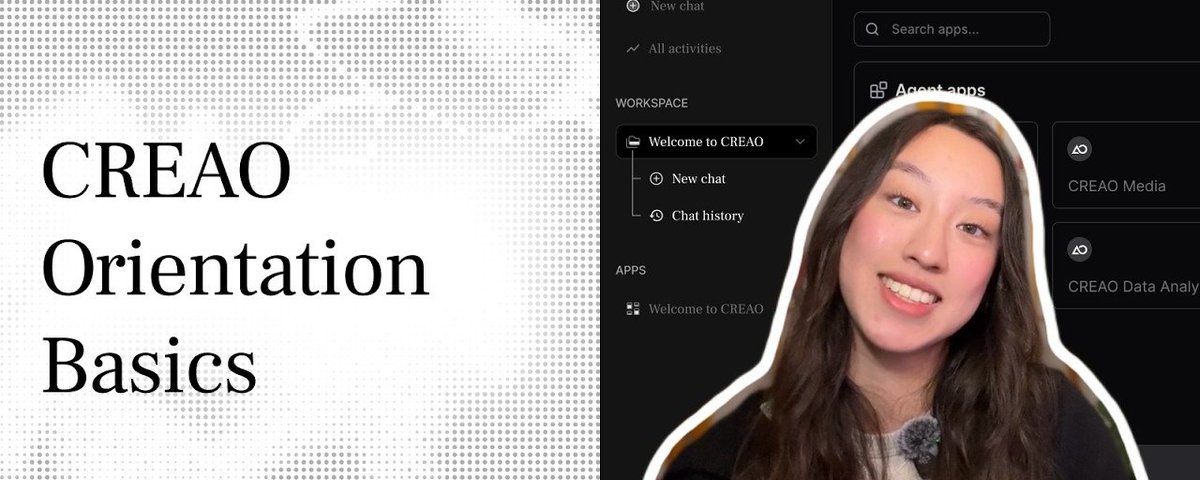
This episode of 'Silicon Valley 101' invited three founders of Creao to discuss Harness Engineering. It's not just simple Prompt Engineering, nor Context Engineering, but truly treating AI as the primary productive force and redesigning the entire company organization and workflow.
这期《硅谷 101》请来了 Creao 的三位创始人,重点聊了 Harness Engineering。它不是简单的 Prompt Engineering,也不是 Context Engineering,而是真正把 AI 当成生产力主体,重新设计整个公司组织和流程。
Over the past three years, LLM engineering capabilities have gone through three evolutions.
In 2023, people were talking about Prompt Engineering, focusing on how to write good prompts; in 2024, it shifted to Context Engineering, focusing on providing more complete context to models; by 2026, a new term suddenly emerged: Harness Engineering.
The word "harness" originally means the reins for controlling a horse, but now it describes how to build a system around LLMs that can self-heal, self-improve, and operate continuously in the real world.
过去三年,大模型工程能力经历了三次进化。
2023 年大家在聊 Prompt Engineering,重点是怎么写好提示词;2024 年变成 Context Engineering,重点是怎么给模型更完整的上下文;到了 2026 年,一个新词突然冒出来:Harness Engineering。
Harness 本意是给马套的缰绳,现在用来形容:怎么围绕大模型搭一套能自我修复、自我提升、并且能在真实世界持续工作的系统。
Creao's CTO Peter previously worked on Meta's Llama team and Apple's multimodal group. He posted a tweet that exploded to 1.87 million views.
The core idea: most companies' so-called "AI-First" is fake. Real AI-First means transforming AI from an auxiliary tool into the productivity driver, completely re-architecting the organizational structure and workflow.
The result: they can finish a feature at 10 a.m., run an AB test at noon, kill it based on data by 3 p.m., and rewrite a better version by 5 p.m.
Traditional processes might take six weeks; now it's done in a day.
Creao 的 CTO Peter 之前在 Meta Llama 团队和苹果多模态组工作。他发了一条推特,直接爆了 187 万流量。
核心观点是:大多数公司所谓的 AI-First 都是假的。真正的 AI 优先,是把 AI 从辅助工具变成生产力主导者,彻底重构组织架构和工作流。
结果就是:他们早上 10 点写完一个功能,中午就能做 AB test,下午 3 点根据数据砍掉,5 点又重写出更好的版本。
传统流程可能需要六周,现在一天搞定。
In the past, product development was slow, allowing marketing teams to prepare four to five months in advance. Now it's reversed: development speed far exceeds marketing, and marketing teams are chasing the features engineers release.
Clark says they no longer need a feature wishlist or bug list. Because agents can detect and auto-fix bugs in time, and features are so abundant they can't even use them all.
This change is dramatic.
What used to be the scarcest resource in a company—development capacity—has now become "whether the organization can absorb AI capacity."
以前产品研发速度慢,营销团队可以超前四五个月准备。现在反过来了:开发速度远超营销,营销团队在追着工程师发布的功能跑。
Clark 说,他们现在已经不需要 feature wishlist 和 bug list 了。因为 bug 能被 agent 及时发现并自动修复,feature 多到根本用不完。
这个变化很夸张。
过去公司最稀缺的是“开发产能”,现在变成了“组织能不能消化 AI 产能”。
Trust has shifted from "trusting people" to "trusting AI."
Another big change: the way cross-team collaboration works has transformed.
Before, cross-team alignment costs were extremely high, with constant back-and-forth syncs among engineering, product, and marketing. Now AI can directly tell Marketing: here's what Engineering is releasing today, without humans acting as go-betweens.
Peter and his team even dismantled the product manager role.
Because from their perspective, alignment costs are themselves a false need. If the system is powerful enough, decisions can be driven by AI, and information can flow automatically via AI.
信任从“信任人”,变成了“信任 AI”。
还有一个很大的变化:跨团队协作方式变了。
以前跨团队对齐成本极高,工程、产品、营销之间要反复同步。现在 AI 可以直接告诉 Marketing:今天 Engineering 要发布什么功能,中间不需要人来回沟通。
Peter 他们甚至把产品经理这个角色拆解掉了。
因为在他们看来,对齐成本本身就是个伪需求。只要系统足够强,决策可以由 AI 驱动,信息也可以由 AI 自动流转。
Even more counterintuitive: junior engineers adapt more easily to an AI-First environment than senior engineers.
Senior engineers carry too much tech debt and mental inertia, unwilling to expand their scope into product design and data analysis. Junior engineers, on the other hand, are more willing to cross functional boundaries.
Peter says that the most valuable people in the future may not be deep specialists in a vertical domain, but generalists who possess Architecture + Product Sense + Marketing Sense.
This is worth pondering.
Once AI amplifies execution ability, what becomes truly scarce is: can you define problems, judge direction, understand users, read data, and build the system?
更反常识的是:初级工程师比资深工程师更容易适应 AI-First 环境。
资深工程师有太多技术债务和思维定势,不愿意把 scope 扩大到产品设计和数据分析。初级工程师反而更愿意跨越职能边界。
Peter 说,未来最值钱的可能不是某个垂直领域的 deep specialist,而是同时具备 Architecture + Product Sense + Marketing Sense 的 generalist。
这点很值得想。
AI 把执行能力放大之后,真正稀缺的会变成:你能不能定义问题、判断方向、理解用户、看懂数据,并把系统搭起来。
What really blew my mind was Clark's mention of the Agent Economy.
They found that a lot of marketing materials today are actually optimized for agents, not humans.
In the future, decisions like buying things, subscribing to newspapers, or ordering milk might all be made by agents. So, is the content you produce today meant for human consumption or AI consumption?
The criteria for value judgment may become completely different.
In the past, we optimized for human attention; in the future, we may also need to optimize for agent understanding, retrieval, judgment, and action.
最让我脑子嗡嗡的,是 Clark 提到的 Agent 经济。
他们发现,现在很多营销素材其实是给 Agent 看的,而不是给人看的。
未来买东西、订报纸、订牛奶,可能都是 Agent 在决策。那你今天产出的内容,到底是给人消费,还是给 AI 消费?
价值判断标准可能会完全不一样。
过去我们优化的是人类注意力,未来可能还要优化 Agent 的理解、检索、判断和行动。
They divide Harness into two layers.
The first layer is the harness for the company's internal agent systems, focusing on self-healing and auto-fixing.
The second layer is the agents that users build themselves on the Creo platform, which can also continuously self-improve.
Their entire team is only 25 people, with fewer than 10 engineers, yet they completed the entire architecture overhaul in two weeks.
Peter says that a product of this scale a year ago would have required at least 100 people working for four to five months.
他们把 Harness 分成两层。
第一层是公司内部 Agent 系统的 Harness,重点是 self-healing 和 auto-fixing。
第二层是用户在 Creo 平台上自己搭建的 Agent,也能持续 self-improve。
他们整个团队只有 25 人,工程师不到 10 人,却在两个星期内完成了整个架构重构。
Peter 说,一年前这种规模的产品至少需要 100 人干四五个月。
This isn't to say that the AI-First transformation comes without cost.
They spent a long time aligning the entire team's mindset, especially getting everyone to truly believe: AI can lead, not just assist.
Many people say they embrace AI, but essentially they are only willing to use AI tools to boost their own efficiency, not to cede the role of primary productive force to AI.
This mental gap determines whether a company can truly complete its AI-First transformation.
这不是说 AI-First 转型没有代价。
他们花了很长时间 align 全员 mindset,尤其是让大家真正相信:AI 可以主导,而不只是辅助。
很多人嘴上说拥抱 AI,但本质上只愿意用 AI 工具提升自己的效率,并不愿意把生产力主体让给 AI。
这个心态上的差距,决定了一家公司能不能真正完成 AI-First 转型。
After listening to this episode, my biggest cognitive upgrade is:
AI-First is not about layering AI tools on top of existing processes, but treating AI as a new species and redesigning the entire organizational ecosystem.
The core value of humans in the future will not be execution, nor alignment, but defining the direction of needs and ultimately reviewing whether outcomes serve human interests.
This episode is incredibly dense with information; the full transcript is very long, so I recommend going to Podwise to read the complete version.
Do you think the product manager role will disappear in the future, or will it evolve into a new form?
Feel free to discuss in the comments.
More hardcore podcast content: Podwise @PodwiseHQ
听完这期,我最大的认知升级是:
AI-First 不是在现有流程上叠加 AI 工具,而是把 AI 当成新物种,重新设计整个组织生态。
人未来的核心价值,不是执行,也不是对齐,而是定义需求方向,以及最终审核结果是否符合人类利益。
这期信息密度极高,逐字稿很长,推荐直接去 Podwise 看完整版。
你觉得未来产品经理这个角色会消失,还是会进化成新形态?
欢迎评论区聊聊。
更多硬核播客内容:Podwise @PodwiseHQ