Laravel 关掉部分仓库的 issue,改要 PR:门槛该升还是降
Laravel 在 Socialite、Scout 等包仓库关闭了 issue 创建入口,改为引导贡献者直接提 pull request,主框架仓库暂未受影响。作者以开源维护者身份逐条列出顾虑:强制提 PR 确实能省下维护者的 triage 时间,但在 AI 辅助下提 PR 的成本已接近提 issue,而 LLM 生成的补丁需要更多审查精力;同一个 bug 引发的重复 PR 还会让 GitHub Actions 反复触发,这一点 issue 不存在。更关键的是,要求 PR 是把贡献门槛抬高而非降低,会用不起 AI 工具、或还没积累足够经验的开发者排除在外——而作者自己当年正是从给 Laravel 提 issue 起步的。全文没有硬结论,只把 trade-off 摆出来,适合关注开源维护、issue/PR 流程与 AI 编码影响的一线工程师阅读。
No more issues
Written on 2026-09-04
An interesting change at Laravel yesterday: they disabled the ability to create issues on a number of repositories and instead encourage people to create pull-requests instead:
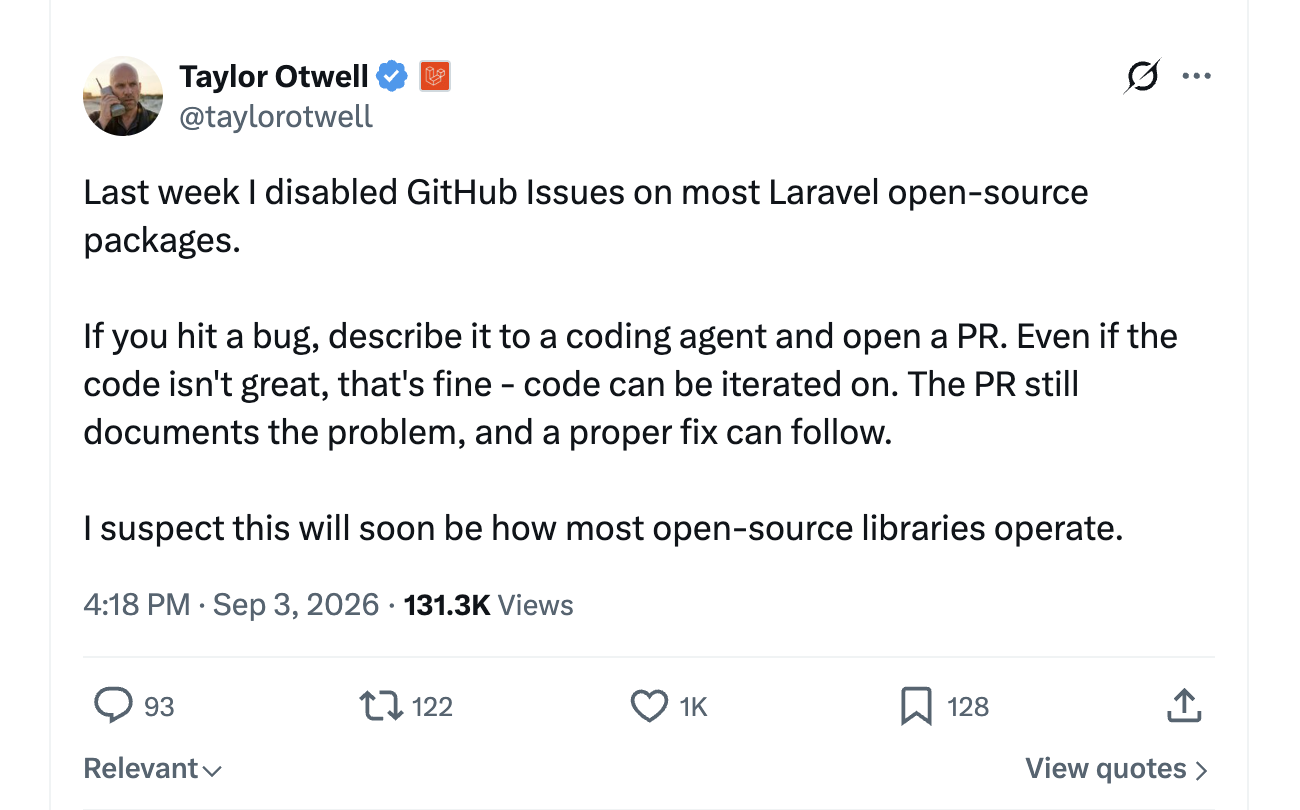
不再有 issue
写于 2026-09-04
Laravel 昨天做了一个有意思的改动:他们关掉了好几个仓库的 issue 创建入口,转而鼓励大家直接提 pull request:
To be clear: this is only the case for Laravel packages like Socialite and Scout, it does not affect the main Laravel repository. Taylor mentioned issues on the framework repository are still enabled, although it's unclear if that will remain or not.
需要说明的是:目前只有 Socialite、Scout 这类 Laravel 子包这么做,主仓库不受影响。Taylor 说框架主仓库的 issue 依然开放,只是会不会一直这样,谁也说不准。
I would say it's a change that mainly benefits the maintainers, not necessarily the users. From the maintainer's point of view, I have to admit: I'm also more likely to invest time in an issue if the submitter is willing to submit a PR for it. There simply isn't enough time in a day to do everything, and oftentimes you have to prioritize. Forcing contributors to immediately submit a PR does potentially reduce the triaging time.
我觉得这个改动主要利好维护者,对用户则未必。站在维护者的角度,我得承认:如果提 issue 的人愿意顺手提个 PR,我也更愿意在这件事上花时间。一天的时间就那么多,不可能什么都做,总得排出优先级。要求贡献者直接提 PR,确实可能省下一些 triage 的功夫。
That being said, in this era of AI, submitting a PR has become almost as trivial as submitting an issue. On top of that, my experience tells me that AI-generated PRs require a lot more review effort compared to when people have thought possible solutions themselves before submitting a PR (and requiring them to create issue for it is a good way to encourage critical thinking).
话虽如此,在 AI 时代,提一个 PR 已经和提一个 issue 差不多轻松了。而且以我的经验,跟那些先自己琢磨过解决方案、再提 PR 的人相比,AI 生成的 PR 往往要多花不少精力去审查。(而要求他们先开 issue,恰好是鼓励独立思考的好办法。)
We'll circle back to AI in a second though, first, some other considerations.
Let's say Laravel accidentally releases a bug that affects a large number of people. Chances are likely you'll get dozens of PRs fixing that same issue, hours after that release. Now, you could argue that this is the same amount of overhead compared to issues, because if issues were still allowed, chances are there would be dozens of issues for the same bug that also have to be closed.
The main problem I see with "PR spam" isn't necessarily the number of PRs, but rather the amount of work they trigger: automated CI actions have the potential to run many more times because duplicated PRs. That's a problem you don't have with issues. Of course, GitHub Actions can be configured to not trigger for every PR, so maybe this is a non-issue (🥁) after all.
AI 的事我们待会儿再说,先聊几个别的点。
假设 Laravel 不小心发布了一个影响面很广的 bug。很可能发版几个小时后,你手里就堆了几十个修同一个问题的 PR。你可能会说,这和收 issue 的负担差不多——如果 issue 还开着,同一个 bug 大概也会有几十条 issue 要挨个关掉。
在我看来,「PR 刷屏」的麻烦未必在于 PR 的数量,而在于它们触发的工作量:重复的 PR 会让自动化 CI 反复跑很多次。收 issue 就没有这个问题。当然,GitHub Actions 可以配置成不针对每个 PR 都触发,所以这也许根本不算个事儿(🥁)。
One good thing I think this change highlights, is that we're in this together. Open source isn't about just dumping an issue and expect someone else to fix it. You're encouraged to contribute, and without contributions, most open source projects would fail.
我觉得这个改动有一点值得肯定:它提醒我们,开源是大家一起扛的事。开源不是随手丢个 issue,然后等着别人来修。它鼓励你亲自参与;没有贡献,多数开源项目根本活不下去。
That being said. Laravel isn't really an open source company anymore. They are selling products and services to an ecosystem that originated from open source. From a business point of view, with a team working full-time on open source, the change seems odd.
话又说回来。Laravel 已经不太算是一家开源公司了。他们在一个源自开源的生态里卖产品和服务。从商业角度看,养着一支全职做开源的团队,却做出这种改动,多少有点反常。
I always say that for every issue created, there likely are hundreds if not thousands of people who encounter the same thing and just don't bother reporting it. Think about it: someone actually took the time to stop what they were doing, head over to GitHub to report and describe a problem with code I am responsible for.
That, in itself, is quite the contribution. It's why I always make it a point to properly acknowledge and thank issue reporters, even if their issue is wrong, or I don't intend to fix it. They have already dedicated some of their precious time, which can only be appreciated.
So my opinion is that an open source project should do anything to lower the bar of contributing, not make it higher. Requiring people to submit PRs instead does raise the bar.
我常说,每一条被提交的 issue 背后,可能都有成百上千个遇到同样问题却懒得反馈的人。想想看:有人愿意停下手里的事,专门跑到 GitHub 上,把我负责的代码里的问题讲清楚。
这本身就是一种贡献。所以哪怕对方的 issue 提错了,或者我压根没打算修,我也会认真回应、说声谢谢。他们已经付出了自己宝贵的时间,这值得被尊重。
所以我的看法是:开源项目应该想尽办法降低贡献门槛,而不是抬高它。要求大家必须先提 PR,恰恰是把门槛抬高了。
Finally, there's the point of inclusivity (related to AI, that is). Now, I don't think Taylor meant to say you MUST use AI to submit pull requests. I don't think any open source maintainer would care if you didn't use AI. However, it is indeed true that using AI in a codebase you're unfamilliar with might allow more people to contribute.
Although, that argument also goes the other way: there are still many people not using AI, some limited by financial means, others rejecting AI on ethical concerns; and indeed: the investment in sending a PR without AI might be too big to people who'd have no problem submitting an issue.
最后是包容性的问题(和 AI 有关)。我不认为 Taylor 的意思是你必须用 AI 才能提 PR,也不觉得有哪个开源维护者会在意你用不用 AI。但确实,在一个自己不熟悉的代码库里借助 AI,可能让更多人有机会参与贡献。
不过这个论点反过来也成立:还有很多人不用 AI,有人是经济条件所限,有人出于伦理考量拒绝 AI。而且说实话,对一个原本提 issue 毫无压力的人来说,不用 AI 去提 PR 的成本可能高得离谱。
There's also the matter of programmer experience. Because in the end, LLM-generated code still needs an experienced human eye to review. Taylor even says that himself:
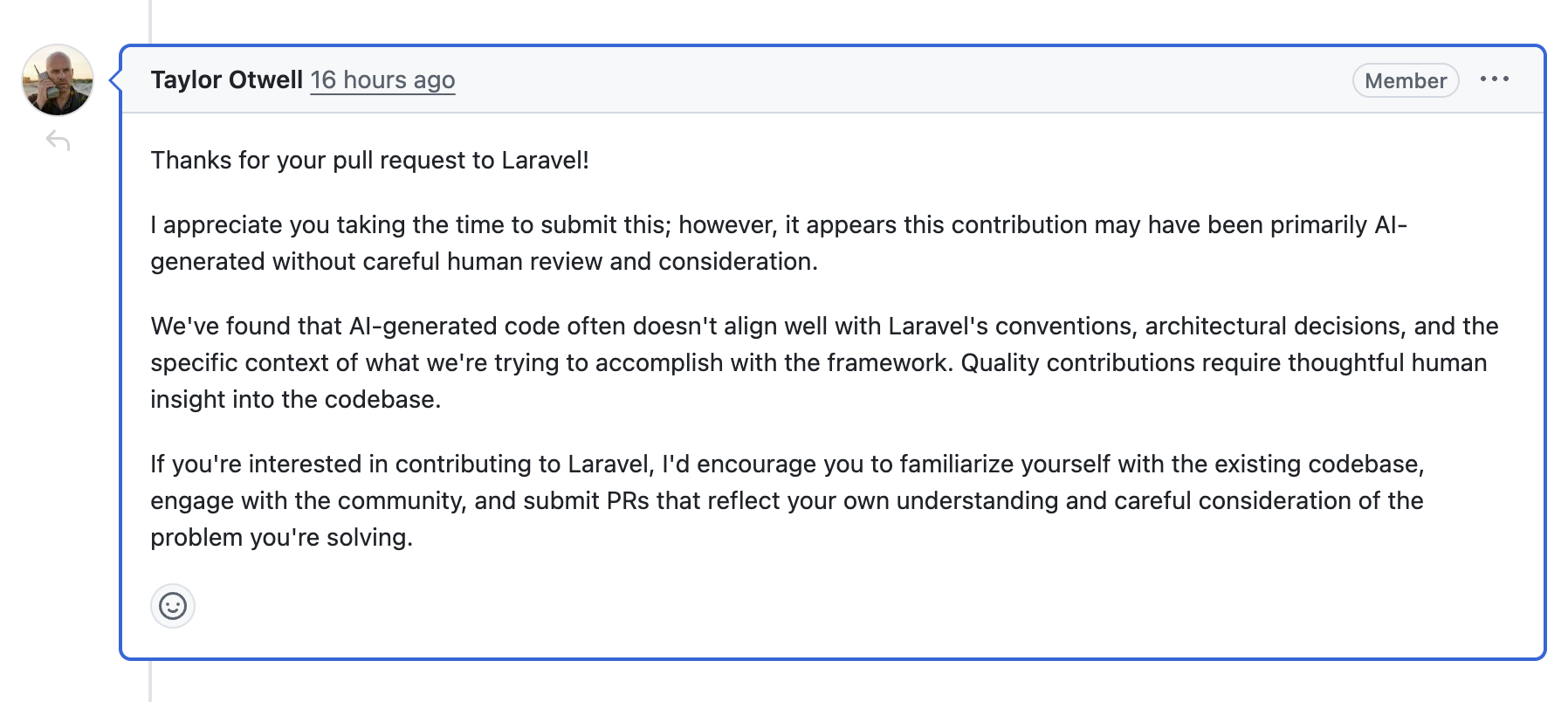
还有程序员的经验问题。因为说到底,LLM 生成的代码还是得有经验的人来审。Taylor 自己也是这么说的:
With or without AI, this change does exclude less experienced programmers from contributing (even if it's only through issues). Many of us started our programmer journey with Laravel, and many of us started out as total noobs. What about these people in the long term?
不管有没有 AI,这个改动确实把经验不足的程序员挡在了贡献之外(哪怕他们原本只是提提 issue)。我们很多人是从 Laravel 开始学编程的,很多人当初也是彻头彻尾的新手。长远来看,这些人怎么办?
I don't want to draw any hard conclusions from this change. I simply listed some of my thoughts, and am curious to hear others. I can see why open source maintainers would choose Taylor's approach, although I also have some questions and reservations. It's definitely a filtering method that could help reduce the load for maintainers, but I also find it hard to reconcile with my belief that every contribution is valuable and poses a learning opportunity for newcomers — even if it's just an issue. Maybe that's not the case anymore at the scale of Laravel?
Let me know your thoughts! You can leave them in a comment or wherever you're reading this.
我不想就这个改动下什么定论。我只是列出自己的一些想法,也很想听听别人的意见。我能理解开源维护者为什么会选 Taylor 的做法,但同样也有一些疑问和保留。这确实是一种过滤机制,能帮维护者减轻负担;可它和我一直以来的信念很难调和——我始终认为,每一份贡献都有价值,对新人来说都是一次学习机会,哪怕只是一条 issue。也许在 Laravel 这样的规模上,这个信念已经不成立了?
欢迎告诉我你的看法!可以在评论区留言,或者在你读到这篇文章的任何地方说两句。